This is another essential conversation that will transform lives. Carvens Lissaint and Dr. Maliek Blade join for a revealing discussion about manhood, connection, vulnerability and life-giving friendship. We ask the question, do we as men really know how to connect? Do we know how to effectively express, process and manage our emotions? In this episode, we reflect on what it means to be in deep relationship, and why so many of us avoid it as men. We delve into the tension that many men experience between “what you do” and “who you are.” You’ll hear honest personal stories, as we lean into the mixed bag that comes with success, accolades and notoriety. We don’t shy away from talking about the pain of isolation, why it’s so easy to slip into, and how to effectively move into the joy that comes from being in authentic community. If you’re a man or you care about the men in your life, this episode is for you!
The Addy Hour is recorded at the Yale Teaching Studios, with engineering support from Ryan McEvoy, edited by Orlando Suazo, and hosted by Dr. Nii Addy. If you enjoyed this episode, please leave a rating and follow our podcast page, to help us grow this podcast and our community.
Charles Hua, founder of Powerlines and former US Department of Energy strategist, makes the case that America’s energy affordability crisis is a regulatory problem. With 80 million Americans struggling to pay their utility bills, and rates rising at the fastest pace in a generation, Charles points out the real power to control consumer prices resides with Public Utilities Commissioners, roughly 200 people he calls “The Supreme Court Justices of Energy.” This small group controls more than $200 billion a year in utility spending. This, all within a system designed almost a century ago.
Steph and Charles discuss why the grid runs at just 50% efficiency, how “capex bias” rewards utilities for building new infrastructure instead of optimizing what already exists, what the rise of data centers could mean for your power bill, and the inexpensive and solutions we could implement quickly if they get the greenlight from regulators. Whether you’re in climate tech, policy, or just nervous to open your electric bill lately, this episode will open up a world we don’t see or think about that often, happening behind every flip of a lightswitch.
For their fourth annual Bulldog Days Live episode, Hannah and Mark ask four recently admitted students visiting campus to reflect on the factors and forces that affected their college application journey – including things they chose to do and things that were completely out of their control. Admissions officer Brynne dazzles the audience with her encyclopedic knowledge of what her admitted students shared in their applications. Hannah and Mark share many more insights from admitted students who considered how they were successful in their college application process.
Clean Energy Has to Outcompete Fossil Fuels (Not Cancel Them)
Aliya Haq has been involved in the environmental movement since she was eight years old, protesting an incinerator in her rural hometown. Over 25 years she’s led policy at Greenpeace, Breakthrough Energy, and now the Clean Economy Project. In this conversation, she tells Steph Speirs why the old playbook of “stop bad things” no longer meets the moment, and what it takes to actually build a clean economy fast enough to matter.
Aliya and Steph dig into the practical questions facing every climate tech founder and investor right now: Why does clean energy need policy to exist? How do permitting reform, transmission, and interconnection actually get unstuck? And how do companies navigate a moment where wealthy funders are backing away from climate, and federal policy feels like quicksand? It’s a candid and clearsighted conversation about what it means to shift from activist to builder–and why the economics of clean energy are already winning, if we let them.
Visiting ISM Fellow Katie Anania discusses her work as an art historian with ISM student Remi Recchia. Dr. Anania covers her latest monograph in progress, Devour Everything: Feminist Art After Agriculture, explores expressions of feminism in art-making spaces, and highlights her upcoming April 10 ISM conference, “Plant Lives: Sacred Interdependencies in the Arts of the Americas.”
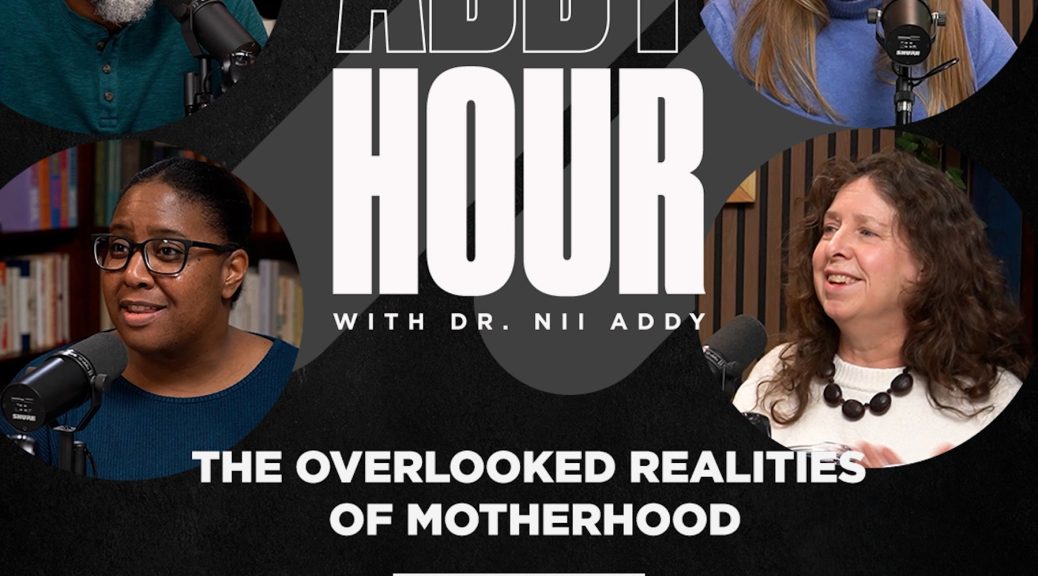
I can’t overstate the importance of today’s episode. This conversation will literally change lives. Today, we shine the spotlight brightly on maternal mental health. Far too many moms have said, “I wasn’t familiar with postpartum mood or anxiety disorders, until I experienced them.” Family members and friends have said, “I had no idea what they were going through.” It doesn’t need to stay that way! If you’ve lived through perinatal mental health challenges, or you know someone who has, you know just how important this conversation is. In this empowering discussion, I’m joined by author and national advocate Teresa M. Twomey, social worker and parent educator Jennifer Vendetti, and social worker and perinatal mental health clinician Dr. Natasha Welz.
Come and learn critical information that each of us should be familiar with. If there are women in your life who are expecting, who’ve recently had children, or who hope to have children, this episode is for you. And this is certainly relevant if you’re an expectant mom yourself. You’ll hear moving stories and reflections of lives impacted by transformative programs, and by the power of authentic and intentional relationships. My guests share practical tips to help each of us recognize the signs of perinatal mood and anxiety disorders. We address myths and misconceptions, and the importance of normalizing the fact that postpartum mental health challenges can and do occur. We also talk through the ways moms can navigate and thrive with effective support, care, and intervention. This is a truly life-giving conversation. Listen in and share it with others! You’ll be glad you did.
The Addy Hour is recorded at the Yale Teaching Studios, with engineering support from Ryan McEvoy, edited by Orlando Suazo, and hosted by Dr. Nii Addy. If you enjoyed this episode, please leave a rating and follow our podcast page, to help us grow this podcast and our community.
“People are going to fly whether we like it or not.” Now what?
The aviation sector has an emissions problem. Convincing people to fly less won’t cut it: The answer is fundamentally reinventing the fuel itself. In this episode of Future in Bloom, host Steph Speirs sits down with Dr. Staff Sheehan, a computer scientist-turned-chemist and five-time entrepreneur, to unpack sustainable aviation fuels (SAFs).
Staff breaks down what’s blocking cheap, abundant, clean electricity. He shares how this problem led him to co-found his fifth company, a nuclear energy startup called Project Omega. He makes the case that nuclear is the safest, most space-efficient, and most reliable baseload energy source available, and that its bad reputation is largely driven by misinformation and resistance from the fossil fuel industry.
Along the way, Staff and Steph tackle greenwashing in aviation, the ethanol industry as a blueprint for SAF adoption, U.S. vs. EU policy approaches, the geopolitics of energy independence, the air quality crisis near airports, and why fossil fuel incumbents “play dirty” to maintain the status quo.
Religion, Power, and Indigenous Lands with Tisa Wenger
Professor of American Religious History Tisa Wenger discusses how the early US government used Christianity to justify indigenous land theft, the limits of religious freedom in America, and the importance of Yale’s new certificate in Native American and Indigenous studies.
A transcript of this episode can be found here: https://divinity.yale.edu/news/2026-04-06-religion-power-and-indigenous-lands-a-quadcast-interview-with-tisa-wenger
Payam Yousefi and the Multifaceted Dimensions of the Music of Iran
In this episode, Dr. Payam Yousefi discusses with Sindy Yang (MAR ’26) his background as a musical performer and scholar. In particular, he shares how his personal experiences as a musician were deeply embedded in social and political movements in Iran, which served as the impetus for his graduate research. Diving into classical Persian and Sufi poetry, Yousefi shows how music in Iran bears moral, political, and even theological dimensions critical to its understanding. Yousefi also discusses the duality of being a performer-scholar, showing how musical practice and scholarly study are symbiotic with each other.